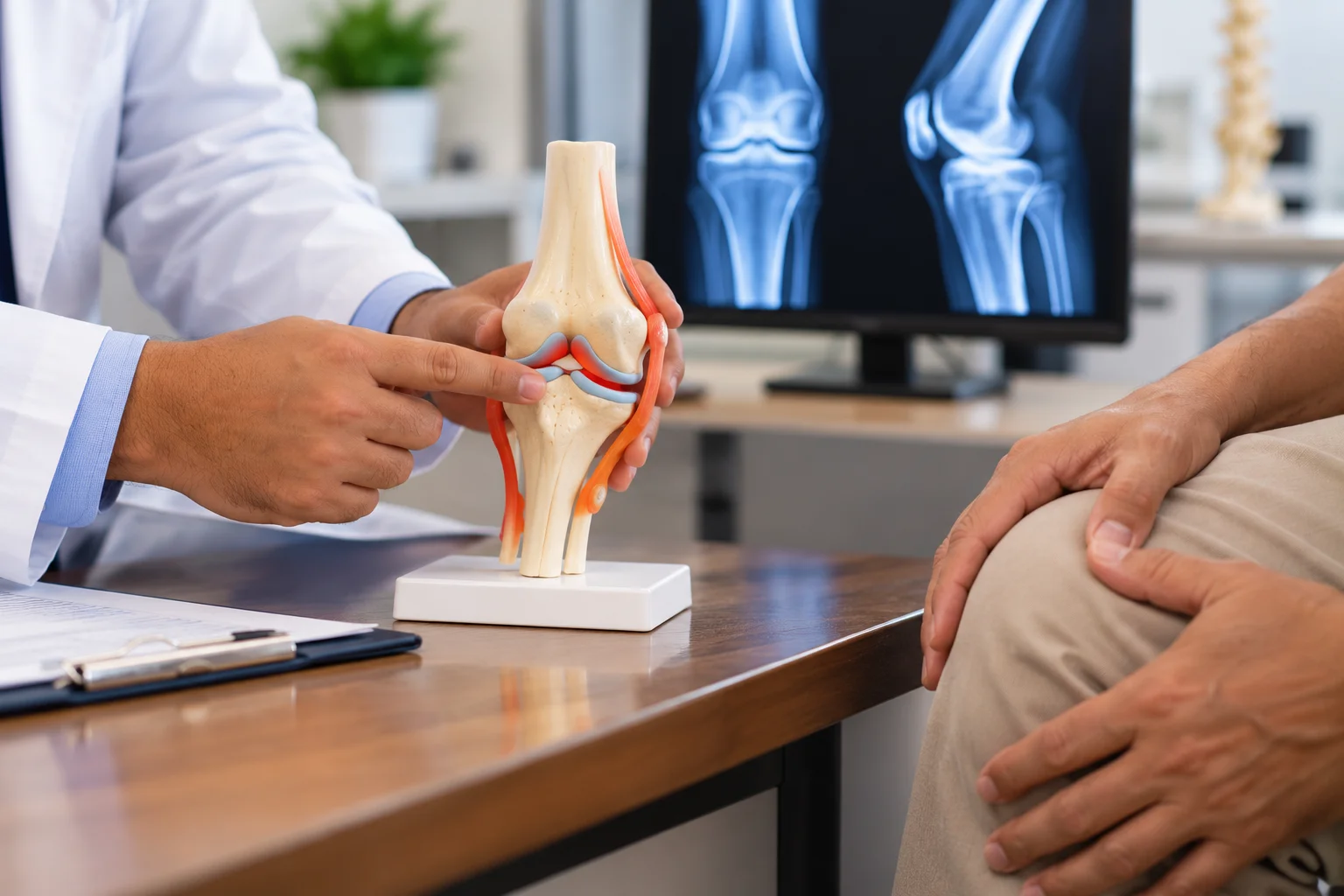
Joint pain can begin with something that seems minor—a little discomfort while climbing stairs, stiffness when getting out of bed, pain after a long walk, or difficulty standing up after sitting for a while. Many people initially ignore these symptoms, expecting them to settle on their own.
But when joint pain starts changing the way you live, it deserves proper attention.
If you are searching for a Joint Pain Specialist in Nagpur, you may already be experiencing pain that is affecting your walking, work, sleep, exercise, or everyday independence. As an orthopaedic doctor, I believe the first step should not be to assume that you have arthritis or that you need surgery. The first step is to understand why the joint is hurting.
Joint pain can have many causes, including osteoarthritis, previous injuries, overuse, inflammation, muscle weakness, or other joint conditions. Treatment therefore needs to be based on the individual patient rather than a standard formula.
At Dr. Agrawal's R.K. Hospital, Nagpur, my approach is to listen to your symptoms, examine the affected joint, understand how the problem is affecting your daily life, and then discuss the treatment options that may be appropriate for you.
The objective is simple: understand the problem first, then choose the treatment.
When Should You See a Joint Pain Specialist in Nagpur?
You should consider consulting a Joint Pain Specialist in Nagpur when joint pain is persistent, repeatedly returns, becomes worse, causes swelling or stiffness, reduces your movement, or starts interfering with normal activities or sleep.
You do not necessarily need surgery just because you have joint pain.
Depending on the cause, treatment may include appropriate exercise, physiotherapy, lifestyle changes, medication, injections, or surgery in selected cases. The right option depends on your diagnosis, symptoms, examination findings, and overall health.
What Does a Joint Pain Specialist Do?
When patients hear the term “joint specialist,” they sometimes assume the consultation is mainly about getting an X-ray or receiving pain medication.
I look at it differently.
When you come to me with joint pain, I want to understand the complete picture.
I may ask:
- When did your pain begin?
- Did it start suddenly or gradually?
- Is it present all the time or only during certain activities?
- Does walking make it worse?
- Do you experience stiffness after sitting?
- Is there swelling?
- Did you have an old injury?
- Has your walking distance reduced?
- Does the pain disturb your sleep?
- Have you already tried medicines or physiotherapy?
- What activities are you no longer able to do comfortably?
These questions may seem simple, but they provide important information.
For example, pain after an injury may need to be approached differently from gradually increasing knee pain in someone with osteoarthritis. Similarly, a hot, swollen joint accompanied by fever requires a different level of attention from long-standing mechanical knee pain.
My role is therefore not simply to treat the painful area. It is to identify the likely cause of the pain and its impact on your function.
What Causes Joint Pain?
Joint pain is a symptom, not a single disease.
Several conditions can cause pain, stiffness, swelling, or difficulty moving a joint.
Osteoarthritis
Osteoarthritis is one of the common causes of persistent joint pain, particularly in the knees, hips, and hands. It can cause pain, stiffness, tenderness, reduced movement, and sometimes swelling or a grating sensation.
Patients often describe it to me in practical terms:
“Doctor, I can walk, but I cannot walk as far as I used to.”
Or:
“I can climb stairs, but I have to hold the railing now.”
These changes in function are important.
Osteoarthritis should not be understood simply as something that happens because a person is getting older. Your symptoms, physical function, joint examination, and overall circumstances all matter.
Previous Joint Injuries
An old sports injury, fracture, ligament injury, cartilage problem, or other trauma can sometimes contribute to later joint symptoms.
This is why I always ask patients about previous injuries, even if the injury happened several years ago.
Overuse and Repetitive Stress
Some joint problems develop or worsen when a joint is repeatedly exposed to demanding activity.
This can occur with certain occupations, sports, sudden increases in exercise, or repetitive movements.
The answer is not always complete rest. In many situations, the goal is to identify the aggravating activity, modify it appropriately, and gradually restore strength and function.
Inflammatory Joint Conditions
Not all joint pain is caused by mechanical wear.
Conditions such as rheumatoid arthritis and other inflammatory disorders can produce joint pain and stiffness. Some patients may experience symptoms in multiple joints or prolonged stiffness after periods of inactivity.
If the pattern of symptoms suggests an inflammatory condition, the evaluation and treatment pathway may be different.
Muscle Weakness and Poor Joint Mechanics
The muscles around a joint play an important role in movement and stability.
Weakness, previous injury, altered movement patterns, or reduced physical activity can affect how a joint functions.
This is one reason why strengthening and rehabilitation can be an important part of managing certain joint problems.
Which Joints Can Be Affected by Joint Pain?
Although knee pain is one of the most common reasons for an orthopaedic consultation, joint pain can affect almost any joint.
Knee Pain
Knee pain may occur while:
- Walking
- Climbing stairs
- Squatting
- Standing from a chair
- Exercising
- Sitting for long periods
Some patients also experience swelling, stiffness, clicking, or reduced movement.
When knee pain becomes persistent, I assess whether the problem is related to arthritis, an injury, alignment, soft-tissue problems, or another cause.
Hip Pain
Hip problems can cause pain around the groin, side of the hip, buttock, or thigh.
A patient may notice difficulty:
- Walking
- Climbing stairs
- Getting into a car
- Getting up from a chair
- Putting on footwear
Hip osteoarthritis, for example, can interfere with everyday activities as symptoms progress.
Shoulder Pain
Shoulder pain can make simple movements difficult.
You may have trouble reaching overhead, lifting an object, dressing, or sleeping on the affected side.
Shoulder pain can have several causes, so identifying the source is important before deciding on treatment.
Ankle and Foot Joints
Pain in the ankle or foot can affect walking and balance. Previous injuries, arthritis, instability, and other conditions can contribute.
Hand, Wrist and Elbow Pain
Pain in these joints can interfere with gripping, writing, lifting objects, or performing work-related tasks.
The location of the pain gives us a starting point, but the complete clinical picture determines what should happen next.
When Should You See a Joint Pain Specialist?
I generally advise patients not to wait until joint pain becomes unbearable.
If pain is already affecting your normal activities, sleep, movement, or work, it is reasonable to seek medical evaluation. Persistent or recurring pain and swelling also deserve attention.
You should consider an orthopaedic consultation if:
- Your joint pain keeps returning.
- Your pain is gradually increasing.
- You have persistent stiffness.
- Your joint is swollen.
- Your walking ability has reduced.
- You find stairs increasingly difficult.
- You need support to stand or walk.
- Pain is disturbing your sleep.
- You have difficulty performing your normal work.
- You are repeatedly relying on pain medication.
- Pain continues despite home treatment.
- You have a previous injury involving the joint.
You do not have to wait until you need a walking stick.
Early evaluation can help you understand what is happening and whether there are treatment options that may help before the problem becomes more limiting.
How Is Joint Pain Diagnosed?
A common question I hear is:
“Doctor, should I get an MRI?”
My answer is: not necessarily.
The right investigation depends on what we are trying to find.
I begin with your medical history and physical examination.
During the examination, I may assess:
- Joint movement
- Tenderness
- Swelling
- Stability
- Alignment
- Muscle strength
- Walking pattern
- Functional limitations
Depending on what I find, imaging or other investigations may be recommended.
For typical osteoarthritis, diagnosis can often be based on clinical symptoms and examination, and routine imaging is not always necessary. NICE specifically recommends against routinely using imaging to diagnose osteoarthritis when the presentation is typical.
That does not mean imaging is never useful.
An X-ray or other investigation may be appropriate when the symptoms are unusual, the diagnosis is uncertain, there has been an injury, or another condition needs to be evaluated.
I prefer investigations that answer a clinical question, rather than ordering tests simply because they are available.
Does Every Joint Pain Need an X-Ray or MRI?
No.
More tests do not automatically mean a better diagnosis.
An X-ray can provide information about bones, alignment, and certain structural changes.
An MRI can provide information about soft tissues and other structures that may not be visible on an X-ray.
The important question is:
“Will this investigation change how we manage the patient?”
That is how I prefer to approach diagnostic testing.
If your symptoms and examination already provide a clear direction, unnecessary investigations may not add useful information.
On the other hand, if your symptoms are unusual or suggest an injury or another condition, appropriate imaging can be valuable.
Can Joint Pain Be Treated Without Surgery?
Yes. This is one of the most important things I want patients to understand.
Joint pain does not automatically mean joint replacement.
Treatment depends on the underlying condition.
For osteoarthritis, evidence-based management can include therapeutic exercise, appropriate weight management for people who are overweight, medicines when appropriate, and other individualized treatments. NICE recommends therapeutic exercise as a core treatment for osteoarthritis.
Exercise and Strengthening
Appropriate exercise can help improve physical function and symptoms in people with osteoarthritis.
The important word is appropriate.
I do not recommend that every patient perform the same exercises.
A person with severe knee arthritis, a recent injury, and a healthy person experiencing mild activity-related pain may need very different exercise plans.
The goal is to improve strength and movement without unnecessarily aggravating the condition.
Physiotherapy
Physiotherapy may help patients improve:
- Muscle strength
- Joint movement
- Balance
- Walking
- Functional ability
A physiotherapist can also help modify exercises according to your condition.
Weight Management
For people with osteoarthritis who are overweight, weight management can help reduce pain and improve physical function. NICE notes that weight loss can be beneficial and that greater weight loss may provide greater benefits for some people with knee osteoarthritis.
I look at this as part of overall joint health, not as a judgment about someone's appearance.
Medicines
Medication may be appropriate for some patients, but it should be chosen according to the individual's medical history.
Certain pain medicines may not be suitable for people with particular kidney, stomach, heart, liver, or other medical problems.
If you find yourself taking painkillers frequently, I recommend discussing this with a doctor rather than continuing indefinitely without evaluation.
Injections
In selected cases, an injection may be considered.
Whether it is appropriate depends on the diagnosis, symptoms, previous treatment, and individual circumstances.
There is no single injection that is suitable for every type of joint pain.
When Is Joint Replacement Considered?
Patients often ask:
“If my joint is damaged, do I have to get a replacement?”
Not necessarily.
Joint replacement is generally considered when symptoms are significantly affecting quality of life and non-surgical treatment has not provided sufficient relief or is unsuitable. For osteoarthritis, treatment decisions should consider symptoms and functional impact rather than relying only on imaging.
When I discuss possible joint replacement with a patient, I consider several factors:
- Severity of pain
- Effect on daily activities
- Walking ability
- Joint stiffness
- Deformity or alignment
- Clinical examination
- Imaging where appropriate
- Previous treatments
- Overall health
- Patient expectations
An X-ray may show significant arthritis, but if symptoms are manageable, immediate surgery may not necessarily be the right decision.
Similarly, if pain has become severe and your ability to live normally has been substantially reduced despite appropriate treatment, surgery may become a reasonable option to discuss.
The decision should be individualized.
What Can You Do at Home to Manage Joint Pain?
Your treatment does not happen only during a doctor's appointment.
There are practical steps that can support joint health, depending on your condition.
Keep Moving
Completely avoiding movement can contribute to weakness and stiffness.
The goal is not to ignore pain or force yourself through severe symptoms. It is to maintain appropriate movement and gradually improve your physical capacity.
Follow Your Exercise Program
If your doctor or physiotherapist has prescribed specific exercises, consistency is important.
For osteoarthritis, therapeutic exercise is an important part of management.
Manage Your Weight Where Appropriate
If excess weight is contributing to stress on weight-bearing joints, gradual weight management may help.
Avoid Sudden Increases in Activity
If you have not exercised regularly, suddenly beginning intense activity can aggravate some joint problems.
Build your activity gradually.
Don't Keep Ignoring Recurring Pain
Temporary relief is not the same as solving the underlying problem.
If pain repeatedly returns, find out why.
Common Mistakes Patients Make With Joint Pain
There are several patterns I commonly discuss with patients.
Waiting Until Pain Becomes Severe
Some people wait until walking becomes extremely difficult before seeking help.
You don't need to wait that long.
Self-Medicating for Long Periods
Taking medication occasionally may be appropriate for some people, but regular use without medical advice can be problematic.
Completely Stopping Exercise
Fear of pain sometimes leads patients to stop all physical activity.
For conditions such as osteoarthritis, appropriate exercise can actually be an important part of treatment.
Assuming Every Joint Pain Is Arthritis
Joint pain has multiple causes.
Do not assume the diagnosis without an appropriate evaluation.
Assuming Surgery Is the Only Solution
Many patients can benefit from non-surgical treatment depending on the cause and severity of their condition.
Choosing Treatment Because It Is Advertised as “Latest”
A newer or more expensive treatment is not automatically the right treatment for every patient.
My advice is to ask:
“Why is this treatment appropriate for my particular condition?”
That question can lead to a much more useful discussion.
When Is Joint Pain an Urgent Problem?
Most long-standing joint pain can be evaluated through a planned consultation. However, certain symptoms require prompt medical attention.
Seek urgent medical care if you have:
- Sudden severe joint pain
- A hot and swollen joint
- Fever or chills along with joint symptoms
- Severe pain after an injury
- Inability to put weight on the joint
- A joint that appears deformed or out of position
- Sudden major loss of movement
A hot, swollen joint with fever or feeling generally unwell can be a sign of infection and should not be ignored.
Similarly, severe pain after a significant injury or inability to bear weight requires prompt assessment.
How I Approach Joint Pain Treatment
When a patient comes to me, my aim is not to start with a procedure.
I start with questions.
What is causing the pain?
How severe is the problem?
What activities are being affected?
What treatments have already been tried?
Can we manage this without surgery?
If surgery is eventually needed, what procedure would actually benefit this patient?
This approach is important because two patients with the same X-ray findings may not necessarily need exactly the same treatment.
One patient may still be functioning well and respond to conservative management.
Another may have severe pain, significant stiffness, and major limitations in everyday life despite appropriate treatment.
Treatment should reflect those differences.
How to Choose a Joint Pain Specialist in Nagpur
If you are comparing doctors and searching for a Joint Pain Specialist in Nagpur, I recommend looking beyond advertisements and rankings.
Consider whether the doctor:
Listens to Your Symptoms
You should be able to explain what you are experiencing without feeling rushed.
Performs a Proper Examination
Diagnosis should not depend entirely on a scan or a description of symptoms.
Explains the Cause
You should understand what may be responsible for your pain.
Discusses Treatment Options
Ask whether non-surgical treatment can help and under what circumstances surgery might be considered.
Gives Realistic Expectations
No responsible treatment should be presented as guaranteed or risk-free.
Provides Follow-Up
Joint care is often a process rather than a single appointment.
At Dr. Agrawal's R.K. Hospital, I aim to keep the treatment discussion practical and patient-specific, so you understand not only what can be done, but also why it is being recommended.
Questions to Ask Your Joint Pain Specialist
Before your consultation, write down your questions.
You can ask:
- What could be causing my joint pain?
- Do I have arthritis or another condition?
- Do I need an X-ray, MRI, or another test?
- Can my condition be treated without surgery?
- What exercises are suitable for me?
- Would physiotherapy help?
- Do I need medication?
- Would an injection be appropriate?
- When should surgery be considered?
- What activities should I avoid?
- What can I safely continue doing?
- When should I return for a follow-up?
There is no need to feel uncomfortable asking questions.
Understanding your treatment is part of good healthcare.
Why Patient Education Matters to Me
I believe patients make better decisions when they understand their condition.
If you know why your knee hurts, you are more likely to understand why exercise may be recommended.
If you understand why your joint has become severely damaged, you can better understand why surgery may eventually be discussed.
And if surgery is not necessary, you should also know that.
Evidence-based osteoarthritis guidance emphasizes patient education, shared decision-making, exercise, and individualized treatment.
My role is therefore not simply to tell you what to do.
I want you to understand:
What is happening → Why it is happening → What can be done → What the realistic options are → What the next step should be.
Joint Pain Treatment in Nagpur: When Should You Book an Appointment?
You don't need to wait until joint pain becomes unbearable.
If pain is:
- Persistent
- Getting worse
- Repeatedly returning
- Affecting your sleep
- Limiting your walking
- Making stairs difficult
- Affecting your work
- Restricting exercise
- Causing swelling or stiffness
it is reasonable to seek an orthopaedic evaluation. NHS guidance similarly recommends medical assessment when joint pain affects normal activities or sleep, keeps returning, worsens, or does not improve with home treatment.
A consultation can answer important questions before you make any major treatment decision.
You may discover that your condition can be managed without surgery.
Or you may find that a more advanced treatment is appropriate.
Either way, understanding the problem is the first step.
Frequently Asked Questions About a Joint Pain Specialist in Nagpur
Who should I consult for persistent joint pain?
An orthopaedic specialist can evaluate many causes of persistent joint pain, particularly when pain is affecting movement or daily activities. If the symptoms suggest an inflammatory or systemic condition, another specialist may also be involved.
What is the most common cause of joint pain?
There are many causes. Osteoarthritis is a common cause, particularly in the knees, hips, and hands, but injuries, overuse, inflammatory conditions, gout, and other problems can also cause joint pain.
Does joint pain always mean arthritis?
No. Joint pain can result from several different conditions. A proper medical history and examination are important before assuming the cause.
Do I need an MRI for joint pain?
Not always. The appropriate investigation depends on your symptoms and examination. In typical osteoarthritis, routine imaging is not always required for diagnosis.
Can exercise help joint pain?
For osteoarthritis, appropriately tailored therapeutic exercise is an important part of treatment and can improve physical function and symptoms.
Can joint pain be treated without surgery?
Yes. Depending on the cause, treatment may include exercise, physiotherapy, weight management where appropriate, medication, activity modification, or other non-surgical approaches.
When is joint replacement considered?
Joint replacement may be considered when symptoms significantly affect quality of life and appropriate non-surgical treatment has not provided sufficient relief or is unsuitable.
Should I stop exercising if my joint hurts?
Not necessarily. Complete inactivity is not automatically the answer. The appropriate exercise depends on the underlying condition, so it is better to discuss suitable activity with a doctor or physiotherapist.
Can excess weight contribute to joint pain?
Excess weight can increase the mechanical load on weight-bearing joints. For people with osteoarthritis who are overweight, weight management can improve pain and physical function.
How do I choose a joint pain specialist in Nagpur?
Look for an appropriately qualified orthopaedic doctor who evaluates the underlying cause, performs a proper examination, explains treatment options, discusses non-surgical care when appropriate, and provides realistic expectations and follow-up.
Conclusion
If you are looking for a Joint Pain Specialist in Nagpur, I would encourage you not to focus only on getting temporary relief from pain.
First, understand why the joint is hurting.
Joint pain may be caused by osteoarthritis, an old injury, overuse, inflammation, weakness, or another condition. The appropriate treatment depends on the diagnosis and the individual patient. In many cases, treatment can begin with non-surgical approaches such as therapeutic exercise, physiotherapy, lifestyle changes, appropriate weight management, and medication when indicated.
When surgery becomes necessary, that decision should also be made after considering your symptoms, functional limitations, examination findings, previous treatment, overall health, and expectations.
I believe good orthopaedic care begins with listening.
If joint pain is affecting the way you walk, work, sleep, exercise, or live your everyday life, don't simply accept it as something you have to tolerate.
Get the cause evaluated.
Understand your options.
Then make an informed decision about your treatment.