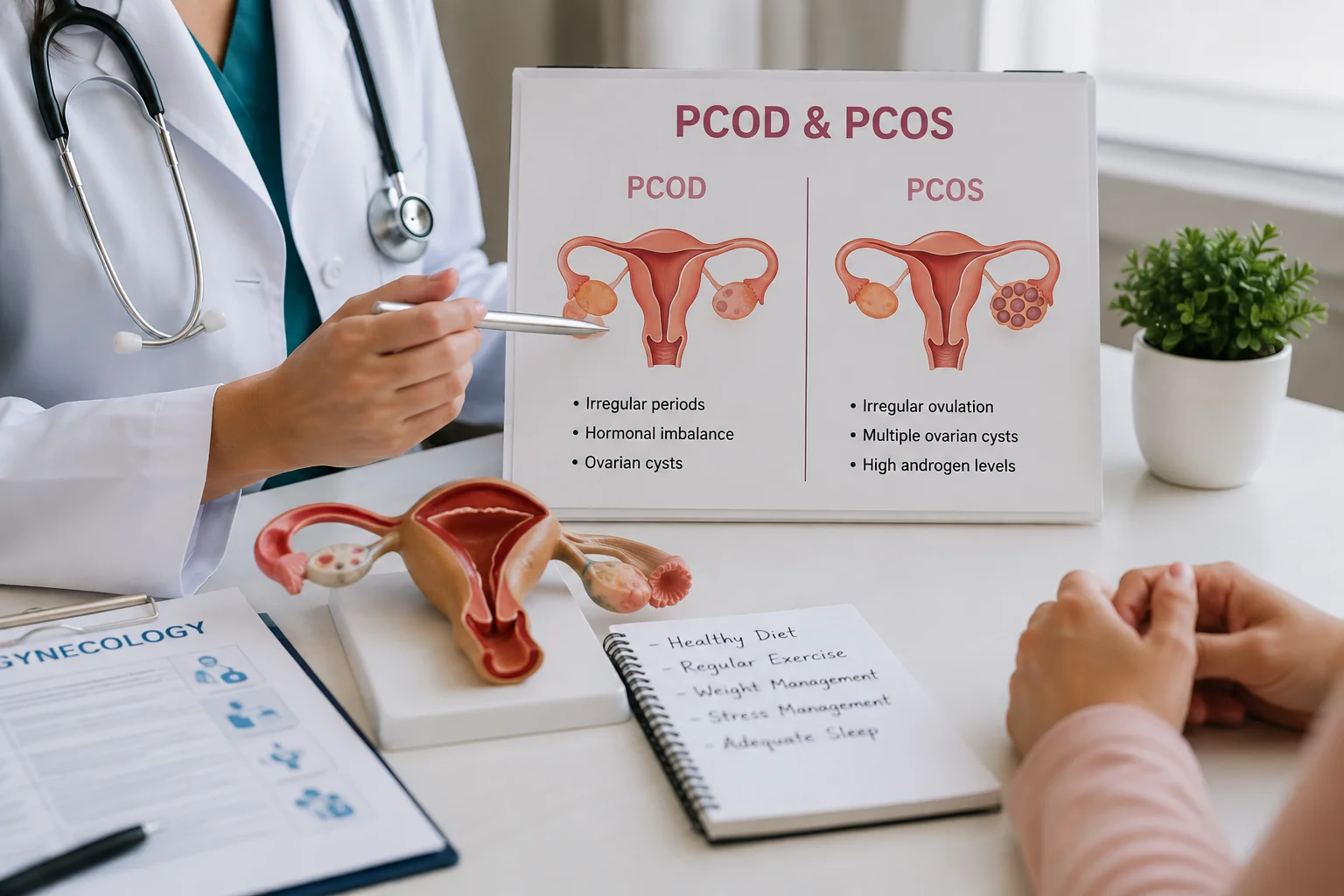
What Is PCOD and PCOS? How Are They Treated
PCOD and PCOS are two terms that many women come across when they experience irregular periods, acne, unwanted hair growth, weight changes or difficulty becoming pregnant. Because the symptoms can overlap, one of the most common questions I hear is, “What is PCOD and PCOS, and are they actually the same condition?”
The answer is No. PCOD and PCOS are related, but they are not exactly the same. PCOS, or polycystic ovary syndrome, is a broader hormonal condition that can affect ovulation, menstrual cycles, androgen levels and metabolic health. PCOD is a term commonly used for ovarian and hormonal irregularities and is often discussed in relation to irregular ovulation.
Understanding the difference is important because not every woman with irregular periods has PCOS, and seeing multiple follicles on an ultrasound does not by itself confirm PCOS.
What Is PCOD?
PCOD stands for Polycystic Ovary Disease. The term is commonly used to describe a pattern of hormonal and ovarian changes associated with irregular ovulation.
Women may experience irregular periods, difficulty with ovulation, acne, weight changes or other hormonal symptoms. However, symptoms vary from person to person.
One important point I always emphasize is that an irregular menstrual cycle should not automatically be labelled as PCOD. There can be several reasons for changes in periods, including stress, thyroid disorders, pregnancy, significant weight changes and other hormonal conditions.
A proper evaluation helps identify the actual cause.
What Is PCOS?
PCOS stands for Polycystic Ovary Syndrome. It is a broader hormonal condition that can affect reproductive and metabolic health.
PCOS may be associated with:
- Irregular or infrequent periods
- Irregular ovulation
- Increased androgen activity
- Acne
- Increased facial or body hair
- Scalp hair thinning
- Difficulty becoming pregnant
- Insulin resistance or other metabolic concerns in some women
Not every woman with PCOS will have all of these symptoms.
This is why I recommend looking at the complete clinical picture rather than focusing on one symptom or one ultrasound finding.
Is PCOD and PCOS the Same?
No, PCOD and PCOS are not exactly the same.
The terms are frequently used interchangeably in everyday conversations, which can create confusion. PCOS is a recognized syndrome involving a combination of reproductive, hormonal and potentially metabolic features.
PCOD is generally used to describe ovarian and hormonal irregularities. The terminology can also vary between patients and healthcare settings.
The important thing for a woman experiencing symptoms is not to become overly concerned about the label. What matters is identifying the underlying hormonal or reproductive issue and managing it appropriately.
What Are the Symptoms of PCOD and PCOS?
The symptoms of PCOD and PCOS can overlap, which is why women often find it difficult to distinguish between them.
Common symptoms may include:
Irregular Periods
Periods may become delayed, infrequent or unpredictable when ovulation is irregular.
If your menstrual cycle repeatedly changes or you go for long periods without menstruating, it is worth discussing this with a gynaecologist.
Acne and Oily Skin
Increased androgen activity can contribute to persistent acne or oily skin in some women.
Increased Facial or Body Hair
Some women may notice increased hair growth on the face, chest or other areas.
Hair Thinning
Hormonal changes may contribute to thinning of scalp hair in some women.
Weight Changes
Some women with PCOS experience difficulty managing their weight or develop metabolic concerns. However, PCOS can occur in women of different body types, so body weight alone cannot confirm or rule out the condition.
Fertility Difficulties
Irregular ovulation can make conception more difficult for some women.
It is important to remember that having PCOS does not mean that pregnancy is impossible.
What Causes PCOD and PCOS?
There is no single cause that explains every case.
PCOS appears to involve a combination of genetic, hormonal and metabolic factors. Increased androgen activity and insulin resistance may contribute to the condition in some women.
Family history may also be relevant.
Lifestyle can influence symptoms and metabolic health, but PCOS should not be described simply as a condition caused by poor eating habits or lack of exercise.
Similarly, women should not blame themselves for developing a hormonal disorder.
Can Stress Cause PCOD or PCOS?
Stress can affect the menstrual cycle and may contribute to irregular periods, particularly when it is prolonged or significant.
However, stress alone should not be assumed to be the cause of PCOD or PCOS.
If your periods remain irregular, it is important to consider other possible causes and seek appropriate medical advice.
How Are PCOD and PCOS Diagnosed?
There is no single test that can diagnose every case of PCOS.
During a consultation, a gynaecologist may consider your menstrual history, symptoms, physical findings, medical history and, when appropriate, blood tests or ultrasound.
Menstrual History
Your doctor may ask about:
- How frequently your periods occur
- Whether your cycles have recently changed
- How long your cycles usually last
- Whether you experience prolonged gaps between periods
- Whether you are trying to conceive
Keeping a menstrual record can make this discussion easier.
Hormonal and Other Blood Tests
Depending on your symptoms, your doctor may recommend blood tests to assess hormone levels or rule out other conditions that can cause similar symptoms.
Tests may also be considered to assess aspects of metabolic health when clinically appropriate.
Ultrasound
An ultrasound may help assess the uterus and ovaries.
However, an ultrasound showing multiple follicles does not automatically mean that you have PCOS.
This is an important distinction because ovarian appearance is only one part of the overall assessment.
Why Should You Avoid Self-Diagnosing PCOS?
Searching for PCOD and PCOS symptoms online can help you understand the topic, but it cannot replace a medical assessment.
Irregular periods can have many causes. Similarly, acne, hair growth or weight changes may occur for reasons unrelated to PCOS.
I often advise patients not to start hormonal medicines or supplements simply because they suspect they have PCOS. The first step should be understanding what is actually causing the symptoms.
Can PCOD and PCOS Affect Fertility?
Yes, they can affect fertility in some women, particularly when ovulation is irregular.
Ovulation is important for natural conception. If ovulation occurs infrequently or unpredictably, conception may take longer.
However, PCOS does not mean that a woman cannot become pregnant.
Many women with PCOS conceive naturally, while others may benefit from medical support to improve ovulation or address other fertility factors.
If you are planning pregnancy and have consistently irregular periods, a gynaecological evaluation can help determine whether you are ovulating regularly and whether additional factors need attention.
How Are PCOD and PCOS Managed?
Management depends on the individual's symptoms, overall health and reproductive goals.
There is no single treatment plan that is appropriate for every woman.
Lifestyle and Daily Habits
Regular physical activity, balanced nutrition, adequate sleep and sustainable weight management when appropriate can support overall metabolic and reproductive health.
The goal should be long-term healthy habits rather than extreme dieting or rapid weight loss.
Managing Irregular Periods
If periods remain irregular, a gynaecologist may recommend appropriate treatment after determining the underlying cause.
Treatment may differ depending on whether you are trying to conceive.
Managing Acne and Excess Hair Growth
Hormonal symptoms such as acne or unwanted hair growth can be managed with appropriate medical treatment when necessary.
The treatment should be selected according to the individual's symptoms and medical history.
Supporting Fertility
For women trying to conceive, management may focus on understanding ovulation and addressing factors that may be affecting conception.
Fertility treatment should always be individualized.
Can PCOD and PCOS Be Cured?
PCOS is generally considered a long-term condition that can be managed rather than permanently cured.
Symptoms can improve significantly with appropriate management, and treatment can be adjusted as a woman's health needs change.
For example, the priorities may be different for a teenager with irregular periods, a woman who is planning pregnancy and someone who is primarily managing hormonal or metabolic symptoms.
This is why regular medical follow-up can be useful.
What Happens If PCOS Is Not Managed?
The effects vary between individuals.
Persistent irregular ovulation can affect fertility. Some women with PCOS may also have metabolic concerns, including insulin resistance or an increased risk of certain long-term health problems.
This does not mean that every woman with PCOS will develop these problems.
Appropriate evaluation and follow-up can help identify relevant risk factors early and guide management.
When Should You See a Gynaecologist?
Consider consulting a gynaecologist if you experience:
- Repeatedly irregular or missed periods
- Long gaps between periods
- Persistent acne along with menstrual changes
- Increased facial or body hair
- Unexplained scalp hair thinning
- Difficulty becoming pregnant
- Significant changes in weight accompanied by menstrual irregularity
- Concerns about an ultrasound report mentioning polycystic ovaries
You do not need to wait until symptoms become severe before seeking advice.
If menstrual changes continue for several cycles, an early evaluation can help identify the cause and avoid unnecessary worry.
PCOD and PCOS Care in Nagpur
Women in Nagpur experiencing irregular periods, hormonal symptoms or fertility concerns can consult a qualified gynaecologist for an individualized evaluation.
Dr. Priyanka Agrawal, MBBS, MD (Obstetrics & Gynecology), provides gynaecology and obstetric care at Dr. Agrawal's R.K. Hospital in Itwari, Nagpur.
Gynaecology care includes evaluation and management of concerns such as PCOS, hormonal disorders, infertility and other reproductive health conditions.
If you are searching online for PCOD and PCOS treatment in Nagpur, choose a specialist who evaluates your symptoms and health goals rather than relying on a single test or symptom.
Frequently Asked Questions
1. What is PCOD and PCOS?
PCOD and PCOS are related hormonal and reproductive conditions, but they are not exactly the same. PCOS is a broader syndrome that may involve irregular ovulation, androgen-related symptoms and metabolic concerns.
2. Is PCOD and PCOS the same?
No. PCOD and PCOS are related but should not automatically be considered identical. A healthcare professional can evaluate your symptoms and determine the appropriate diagnosis and management.
3. What are the common PCOD and PCOS symptoms?
Common symptoms may include irregular periods, irregular ovulation, acne, increased facial or body hair, scalp hair thinning, weight changes and difficulty becoming pregnant. Symptoms vary from woman to woman.
4. Can PCOS affect pregnancy?
PCOS can make conception more difficult for some women because of irregular ovulation, but it does not mean pregnancy is impossible. Many women with PCOS conceive naturally or with appropriate medical support.
5. When should I see a gynaecologist for possible PCOS?
Consult a gynaecologist if you have persistent irregular periods, prolonged gaps between periods, hormonal symptoms or difficulty becoming pregnant. A proper evaluation can determine whether PCOS or another condition is responsible.
Conclusion
Understanding what is PCOD and PCOS is the first step toward making informed decisions about hormonal and reproductive health.
Although PCOD and PCOS are often discussed as if they are the same condition, they are not identical. Their symptoms can overlap, and menstrual irregularity can have many different causes.
The most important thing is to avoid self-diagnosis.
If you are experiencing irregular periods, acne, unwanted hair growth, difficulty with ovulation or fertility concerns, speak with a qualified gynaecologist. A proper evaluation can help identify the underlying issue and determine whether treatment or ongoing monitoring is needed.
For women seeking PCOD and PCOS treatment in Nagpur, Dr. Agrawal's R.K. Hospital provides gynaecology care in Itwari, Nagpur.