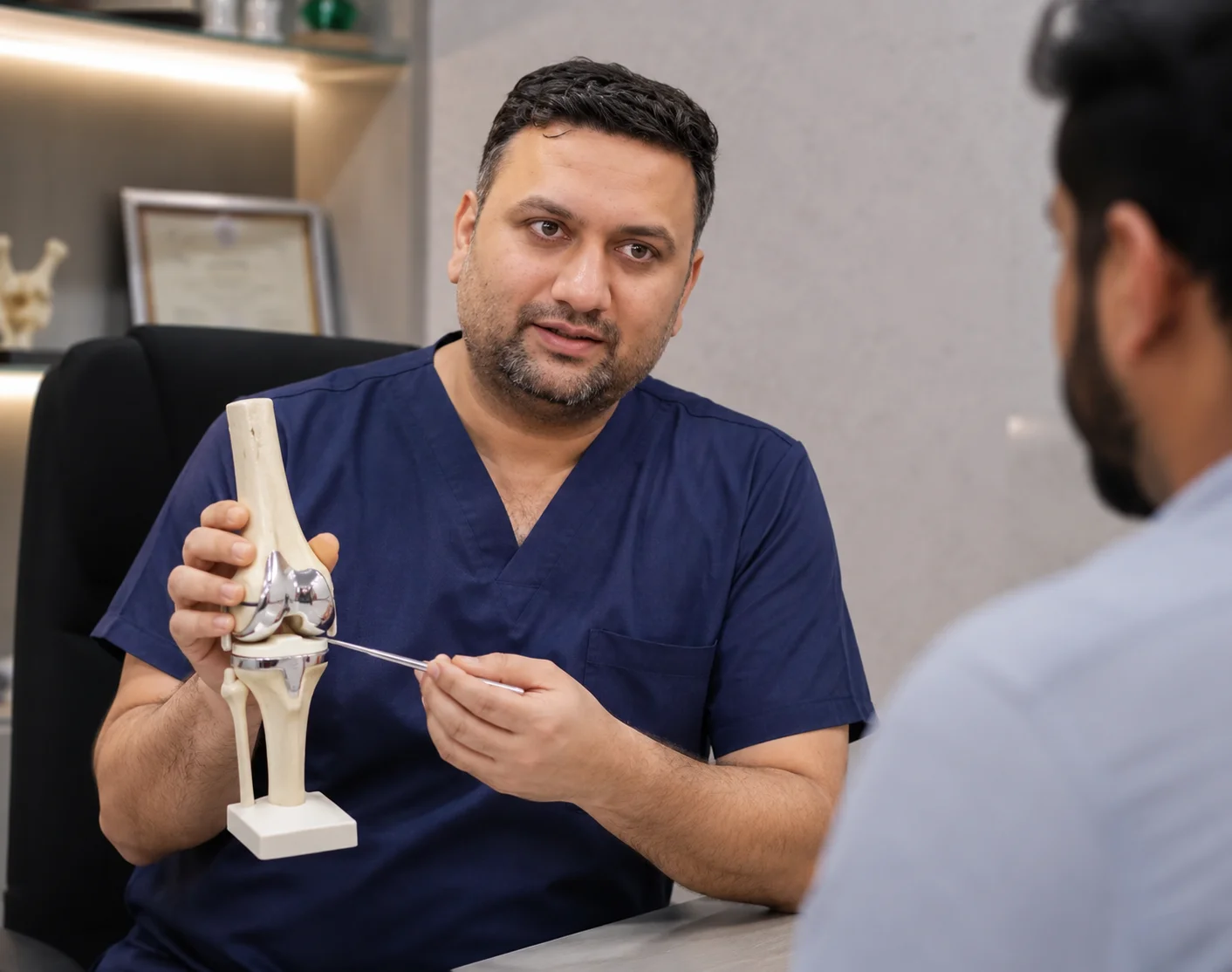
Knee Specialist in Nagpur for Expert Knee Pain Care
As an orthopedic surgeon, one of the most common concerns I hear from patients is, “Doctor, why does my knee hurt so much?” and, “Do I really need surgery?”
My answer is usually the same, before deciding how to treat knee pain, we need to understand why the knee is hurting.
Knee pain can come from arthritis, an old injury, ligament or meniscus problems, cartilage damage, muscle weakness, overuse or several other conditions. The intensity of pain alone does not tell us which treatment is right.
If you are looking for a knee specialist in Nagpur, my advice is to focus first on getting an accurate diagnosis. Once we understand the problem, we can discuss whether physiotherapy, medication, activity modification, injections, minimally invasive treatment or surgery may be appropriate.
When Should Knee Pain Be Evaluated by a Specialist?
Not every episode of knee pain requires an orthopedic consultation. Sometimes mild discomfort after unusual physical activity settles with appropriate rest.
However, I recommend getting the knee evaluated when pain becomes persistent or starts changing the way you move.
You should consider seeing a specialist if you have:
- Pain that continues or keeps returning
- Repeated knee swelling
- Difficulty walking
- Pain while climbing stairs
- Increasing stiffness
- Difficulty bending or straightening the knee
- A sensation that the knee is unstable
- Clicking, catching or locking
- Pain following a fall or sports injury
- Difficulty performing activities you previously did comfortably
If knee pain is affecting your walking, sleep, work or everyday activities, it deserves proper evaluation rather than being repeatedly managed with painkillers.
What I Look For When a Patient Comes With Knee Pain
When a patient visits me with knee pain, I don't start by assuming that the problem is arthritis or that surgery will be necessary.
I first want to understand the patient's story.
I usually consider questions such as:
- When did the pain begin?
- Was there an injury?
- Where exactly is the pain?
- Does it occur during walking or even at rest?
- Is there swelling?
- Does the knee lock or give way?
- Can you fully bend and straighten it?
- What activities make it worse?
- Have you already tried medication or physiotherapy?
- Has the problem gradually progressed?
These details can provide important clues.
I also examine the knee physically. Depending on what I find, imaging or other investigations may be required.
This is one reason I encourage patients searching for the best doctor for knee pain in Nagpur not to choose a specialist simply because of an online title. The quality of evaluation matters much more than a label.
What Are the Most Common Reasons for Knee Pain?
Knee Arthritis
Arthritis is one of the common causes of persistent knee pain, particularly in older adults.
Patients often describe stiffness, pain during walking, difficulty climbing stairs or discomfort after sitting for a long time.
One thing I explain to my patients is that an X-ray and a patient's symptoms should be considered together. An image may show changes in the joint, but treatment decisions should also take into account how the patient actually feels and functions.
Sports and Ligament Injuries
Knee injuries can happen during football, cricket, running, gym workouts and other physical activities.
A sudden twist can affect structures such as the ACL or other ligaments. Some injuries can be managed through structured rehabilitation, while others may require surgical treatment.
The important thing is not to assume that every sports injury needs surgery.
Meniscus Injuries
The meniscus helps distribute load within the knee. It can become injured during twisting movements or develop degenerative changes over time.
Patients may experience pain, swelling, clicking or a sensation of catching inside the knee.
Cartilage Problems
Cartilage helps the knee move smoothly. Damage to cartilage can cause discomfort, stiffness and difficulty with movement.
The treatment depends on the location and extent of the damage and the patient's overall condition.
Previous Knee Injuries
Sometimes a patient tells me, “Doctor, I injured this knee years ago, but it was fine until recently.”
Previous trauma can be relevant even when the injury happened long ago. During an evaluation, I therefore consider previous injuries and surgeries as part of the patient's overall orthopedic history.
How Is the Cause of Knee Pain Diagnosed?
A good diagnosis usually begins with a combination of history, physical examination and appropriate investigations.
I don't recommend that every patient immediately undergo every possible scan. The investigation should answer a clinical question.
For example, an X-ray may be useful when we need to assess bone alignment or degenerative changes. An MRI may be considered when soft-tissue structures such as ligaments, cartilage or menisci need closer evaluation.
The important point is that the scan should support the clinical examination rather than replace it.
Once the findings are considered together, we can discuss the treatment options.
Does Knee Pain Always Mean You Need Surgery?
No. Persistent knee pain does not automatically mean that surgery is necessary.
This is one of the biggest misconceptions I encounter.
Depending on the diagnosis, treatment may include:
- Physiotherapy
- Muscle-strengthening exercises
- Activity modification
- Weight management where appropriate
- Doctor-prescribed medication
- Injections in selected cases
- Bracing or other supportive measures
- Arthroscopic procedures for selected problems
- Joint replacement when clinically appropriate
The right approach depends on the individual patient.
As a knee specialist in Nagpur, my focus is not simply on performing surgery. It is on determining whether surgery is actually required and helping the patient understand the available options.
When Does Knee Replacement Become an Option?
Knee replacement is generally considered when significant joint damage is associated with persistent pain and substantial limitations in daily life.
A patient may begin discussing knee replacement when:
- Walking has become increasingly difficult
- Pain is affecting sleep
- Everyday activities are becoming challenging
- Knee movement has significantly reduced
- Non-surgical treatment is no longer providing adequate relief
- Joint damage is substantial
But there is no single symptom that automatically means, “You need a knee replacement.”
I look at the patient's symptoms, examination findings, imaging, functional limitations, overall health and response to previous treatment before discussing surgery.
What Is Robotic-Assisted Knee Replacement?
Patients today often ask me about robotic-assisted knee replacement.
In simple terms, robotic technology can assist with surgical planning and help the surgeon with aspects of bone preparation and implant positioning during selected procedures.
But I always emphasize one point: the robot does not make the treatment decision. The surgeon does.
The technology is a tool that can support surgical precision. Whether it is appropriate depends on the patient's anatomy, condition and surgical requirements.
For someone searching for the best knee doctor in Nagpur, I would recommend asking not only whether a hospital offers robotic surgery, but also whether the surgeon believes it is appropriate for your particular case.
How Can You Choose the Best Knee Doctor in Nagpur?
Choosing an orthopedic specialist can feel overwhelming because there are many options available.
Instead of relying only on phrases such as “best” or “top,” I suggest patients consider a few practical factors.
Check Orthopedic Qualifications
Look at the doctor's orthopedic qualification and specialist training.
Consider Experience Relevant to Your Condition
A specialist's experience should be relevant to the problem you actually have. Knee replacement, sports injuries, fractures and other orthopedic conditions can require different expertise.
Ask About Non-Surgical Options
A good consultation should include a discussion of whether your problem can be managed without surgery when that is clinically reasonable.
Understand the Recommended Procedure
If surgery is suggested, ask why it is required, what alternatives exist and what recovery may involve.
Consider Hospital Support
If a procedure is eventually required, hospital facilities, diagnostic support, emergency care, operating infrastructure and post-operative monitoring are also worth considering.
These factors are more useful when selecting the best orthopedic doctor in Nagpur than simply comparing promotional claims.
What Can You Do Before Your Orthopedic Appointment?
I often find that patients arrive with incomplete information about how their symptoms have changed.
Before your appointment, try to remember:
- When the pain began
- Whether there was an injury
- Which movements worsen it
- Whether swelling occurs
- Whether the knee locks or gives way
- What medicines you have taken
- Whether you have undergone physiotherapy
- Any previous knee surgery
- Any available X-rays or MRI reports
You don't need to diagnose yourself. Your job is simply to provide accurate information about what you are experiencing.
Why Early Evaluation Can Be Helpful
Many people postpone orthopedic consultations because they believe knee pain is simply part of getting older.
I would caution against that approach.
Age can influence the likelihood of certain knee conditions, but persistent pain should not automatically be accepted as unavoidable.
An evaluation can help distinguish between a condition that may respond to conservative treatment and one that requires more specialized intervention.
For patients in Nagpur, Dr. Agrawal's R.K. Hospital provides orthopedic consultation and treatment in Itwari. Dr. Rahul Agrawal is listed by the hospital as an orthopedic and joint replacement surgeon with an MBBS and MS in Orthopedics. His areas of practice include knee and hip replacement, robotic-assisted joint replacement, sports injuries and fracture management.
Questions I Encourage Patients to Ask Their Knee Specialist
Before starting treatment, don't hesitate to ask questions.
You can ask:
- What is causing my knee pain?
- Do I need an X-ray or MRI?
- Can this condition improve without surgery?
- Would physiotherapy help?
- What happens if I wait?
- What are my treatment options?
- Why are you recommending this particular treatment?
- If surgery is required, what should I expect during recovery?
- Is robotic-assisted surgery appropriate for my condition?
- What can I do to protect my knee after treatment?
A good doctor-patient conversation should help you understand your condition rather than leave you confused about your choices.
Frequently Asked Questions
1. When should I see a knee specialist for knee pain?
You should consider seeing a knee specialist when pain persists, repeatedly returns, causes swelling or stiffness, follows an injury or begins affecting your ability to walk and perform everyday activities.
2. What should I look for when choosing the best doctor for knee pain in Nagpur?
When choosing the best doctor for knee pain in Nagpur, consider orthopedic qualifications, relevant experience, diagnostic evaluation, treatment options, hospital support and how clearly the doctor explains your condition.
3. How do I find the best knee doctor in Nagpur?
To find the best knee doctor in Nagpur, look beyond online rankings. Consider the specialist's qualifications, experience with your particular knee problem, treatment approach and the facilities available for diagnosis and treatment.
4. Does everyone with arthritis need knee replacement?
No. Many patients with arthritis can be managed with non-surgical approaches depending on their symptoms and condition. Knee replacement is considered when joint damage and symptoms significantly affect quality of life and other appropriate treatments are no longer sufficient.
5. How can I choose the best orthopedic doctor in Nagpur?
When searching for the best orthopedic doctor in Nagpur, compare relevant qualifications, experience, treatment philosophy, hospital infrastructure and communication. Most importantly, choose a specialist who evaluates your individual condition before recommending treatment.
Conclusion
As an orthopedic surgeon, my advice to anyone dealing with persistent knee pain is simple, don't ignore the problem, but don't assume that surgery is the answer either.
The first step should always be understanding what is causing the pain.
Whether the problem is arthritis, an injury, cartilage damage or another orthopedic condition, treatment should be based on the patient's symptoms, examination and clinical findings.
If you are looking for a knee specialist in Nagpur, take the time to choose a qualified orthopedic specialist who can explain your condition clearly and discuss both non-surgical and surgical options where appropriate.
At Dr. Agrawal's R.K. Hospital in Nagpur, Dr. Rahul Agrawal provides orthopedic and joint replacement care, including treatment for knee-related conditions.
If knee pain is limiting your movement or affecting your everyday life, schedule an orthopedic consultation and get your knee properly evaluated.